

Struggling to understand Egypt's import rules? A small mistake can leave your cargo stuck for months, costing you a fortune. Follow these critical steps for a smooth shipping process.
The most important rule for shipping to Egypt is getting an Advanced Cargo Information Declaration (ACID) number1 from your buyer before you book your shipment. This 19-digit number is mandatory and must appear on all documents. Without it, your cargo cannot be loaded or shipped.
Shipping to Egypt is not complicated, but it is unforgiving. I have seen countless businesses get into trouble because they missed one small detail. The rules are strict, and there is no room for error. If you get one thing wrong, your shipment can sit at the port for months, racking up huge fees, or even be auctioned off by customs. But don't worry. If you follow the process exactly, your shipment will go smoothly. I am going to walk you through everything you need to know, step by step, to make sure your cargo gets to its destination without any problems.
What is an ACID number and why do you need it before booking?
Your shipment is ready, but your freight forwarder says they can't book it. This unexpected halt can disrupt your entire supply chain. The reason is a missing ACID number.
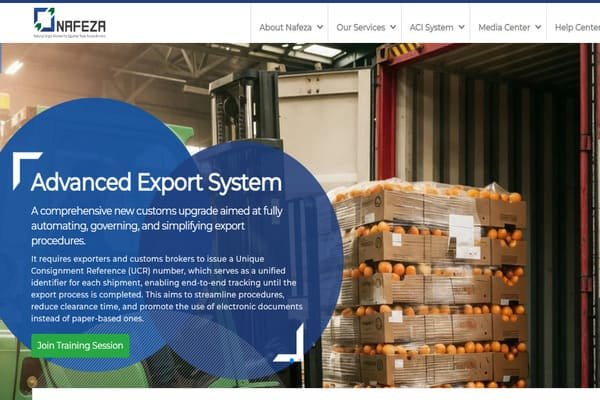
An ACID number is a 19-digit code required by Egyptian customs for all incoming shipments. Your Egyptian buyer must get this number through the Nafeza online portal2 before you ship. This number links your shipment information to customs before the vessel even departs, speeding up clearance.
The Advanced Cargo Information Declaration (ACID) system is the single most important rule in modern shipping to Egypt. Think of it as your shipment's passport. Without it, your cargo is not going anywhere. I remember a client last year who had a container of electronics ready to go. They assumed they could get the paperwork sorted out later. They were wrong. The shipping line refused to even issue a booking confirmation without an ACID number. The cargo sat in our warehouse for two extra weeks while their buyer in Cairo rushed to get the number. It was a stressful and costly delay that could have been easily avoided.
The ACID Process: A Step-by-Step Guide
The process is straightforward, but the responsibility is split between you and your buyer. Here is how it works:
- The Importer's Job: Your buyer in Egypt must register on the government's Nafeza portal. They will upload initial information about the shipment and receive the 19-digit ACID number.
- The Exporter's Job: Your buyer sends this number to you. You must then register on the CargoX platform3 and link your account to the importer's.
- Your Action: You must clearly display the ACID number on all shipping documents, especially the Commercial Invoice and Bill of Lading.
- Final Step: You upload the finalized, ACID-stamped documents to CargoX before the vessel sails from the port of origin.
| Step | Who is Responsible? | Action Required | Deadline |
|---|---|---|---|
| 1 | Egyptian Importer | Apply for ACID number on Nafeza portal. | Before you book freight. |
| 2 | You (the Exporter) | Receive ACID, register on CargoX. | Before you book freight. |
| 3 | You (the Exporter) | Add ACID to all shipping documents. | Before vessel departure. |
| 4 | You (the Exporter) | Upload documents to CargoX. | Before vessel arrival in Egypt. |
Ignoring this process means your shipment will be rejected. It is that simple.
What documents do Egyptian customs require – and what small mistakes lead to big fines?
You think your paperwork is perfect, but it gets rejected by Egyptian customs. Now, your cargo is stuck, and expensive fines are piling up daily while you try to fix it.
Egyptian customs require a legalized Commercial Invoice, Certificate of Origin, and a Bill of Lading with the ACID number. Even small mistakes, like undervaluing goods, can lead to heavy fines, as customs uses a reference price database to check values. Legalization by the Egyptian consulate is mandatory.
After the ACID number, getting your documentation perfect is the next critical step. Egyptian customs officials are meticulous. They will check every detail, and any inconsistency can trigger a full inspection, delays, and penalties. A few years ago, we helped a company shipping furniture to Alexandria. They slightly undervalued the goods on the invoice to try and help their buyer save on duties. It was a disaster. Customs flagged it immediately because the declared value was lower than their internal reference price for similar items. The shipment was held for over a month, and the importer had to pay a massive fine that was far more than any potential savings. Never undervalue your goods.
Key Documents and Common Pitfalls
Accuracy and compliance are everything. A small error on one document can invalidate the entire set.
- Commercial Invoice: This must include the ACID number, detailed descriptions of the goods, HS codes4, value, and Incoterms5. It must be certified by your local Chamber of Commerce and then legalized by the Egyptian Embassy or Consulate in your country.
- Certificate of Origin (CO): This document proves where your goods were manufactured. Like the invoice, it also needs to be certified and legalized by the Egyptian Consulate.
- Bill of Lading6 (B/L): This must show the ACID number, the importer's tax ID number, and match the details on the invoice and CO exactly.
Here are the most common mistakes I see and the problems they cause:
| Mistake | Consequence | How to Avoid |
|---|---|---|
| Missing or Incorrect ACID | Cargo cannot be loaded. | Get the ACID from your buyer before booking. |
| Undervaluing Goods | Heavy fines, re-evaluation, and long delays. | Declare the true transaction value of your goods. |
| No Consular Legalization | Documents are rejected by customs. | Send your invoice and CO to the Egyptian Consulate. |
| Mismatched Information | Shipment is flagged for inspection and delays. | Double-check that all details are identical across all documents. |
Why are labeling and packaging the most overlooked trap in Egypt shipping?
Your products are high-quality and the documents are perfect. But your shipment is held at the port. The reason? A simple mistake on your product label or the wooden pallet it sits on.
Packaging and labeling are a frequent cause of customs delays in Egypt. All labels must include Arabic. Food and medicine must have at least half their shelf life remaining upon arrival. All wood packaging must have a clear ISPM 15 (IPPC) stamp.

This is one of those areas that trips up even experienced shippers. You spend so much time on the big things like freight and documents that you forget these simple physical requirements. I once worked with a sports equipment brand shipping to Cairo. They had everything right—the ACID number, the legalized documents, everything. But the shipment was stopped because the product boxes only had English text. They had to pay for a local team in Egypt to open every carton and apply new Arabic-language stickers. It was an expensive and time-consuming lesson in the importance of details. These rules are not suggestions; they are strict requirements.
Your Packaging and Labeling Checklist
Before your goods leave the factory, make sure you can tick every box on this list.
-
Arabic Language on Labels:
- Is the product name and description in Arabic?
- Are the country of origin and importer's details in Arabic?
- For food products, are the ingredients and nutritional information in Arabic?
-
Shelf-Life Requirements:
- This applies mainly to food, beverages, and pharmaceuticals.
- The rule is strict: The product must have at least 50% of its total shelf life remaining on the date it arrives at the Egyptian port. If a product has a 12-month shelf life, it must have at least 6 months left when it lands.
-
- Does your shipment use any wood packaging, like pallets, crates, or dunnage?
- If yes, the wood must be treated (heat-treated or fumigated) and stamped with the official IPPC "wheat stamp." This proves it is free of pests. Unstamped wood will be rejected or fumigated at your expense.
Following these rules is non-negotiable. Getting them right from the start saves you from costly interventions at the destination port.
How do duties and payment terms affect your bottom line?
You have successfully shipped your goods, and they have cleared customs. But now your buyer says they have trouble paying you. Your money is tied up, and your business cash flow is at risk.
Always confirm payment terms with your buyer before shipping to Egypt. The country has faced foreign exchange (forex) shortages, making it difficult for importers to get US dollars. Secure your payment with a deposit or a Letter of Credit (L/C)8 to protect your interests.

While customs duties are the importer's responsibility, payment terms are very much your concern. The financial side of the deal can be just as risky as the logistics. I’ve seen this happen before. A client of ours, a wholesaler of home goods, shipped two containers to a new buyer in Egypt on "payment after arrival" terms. The buyer was honest and had the money in Egyptian Pounds, but their bank had a long waiting list to exchange it for US Dollars. My client had to wait almost four months to get paid. It put a huge strain on their finances. Since then, I always advise clients shipping to Egypt to be proactive about securing payment.
Protecting Your Payment
Don't leave your payment to chance. Here’s what you need to consider:
- Customs Duties and Taxes: These are paid by the importer in Egypt. However, a high duty rate can make your product too expensive for the market. It's wise to understand the approximate duty rate for your HS code so you know if the deal is commercially viable for your buyer.
- Incoterms: Choose your Incoterms carefully. Terms like Ex Works (EXW) or Free on Board (FOB) give you less risk, while Delivered Duty Paid (DDP) makes you responsible for everything. For Egypt, I often recommend FOB or Cost and Freight (CFR), where the buyer handles the import process.
- Foreign Exchange (Forex) Risk: This is a real issue. The importer might have funds locally but can't access the foreign currency (like USD or EUR) to pay you.
- Secure Payment Methods:
- Upfront Deposit: Always ask for a significant deposit (e.g., 30-50%) before you start production or book the shipment.
- Letter of Credit (L/C): For larger deals, an L/C from a reputable bank is the safest option. It’s a guarantee from the buyer’s bank that you will be paid once you present compliant shipping documents.
Confirming payment is as important as confirming the shipping address.
What happens if cargo stays too long at an Egyptian port?
A small customs delay occurs, and you think it will be resolved in a few days. But days turn into weeks, and you receive a shocking bill for port storage fees that exceeds the value of your goods.
Egyptian ports offer very limited free time, typically only 8 days. After that, high daily storage fees (demurrage9) begin. If cargo is not cleared within 3 months, customs has the right to seize and auction it to recover costs, resulting in a total loss for you.
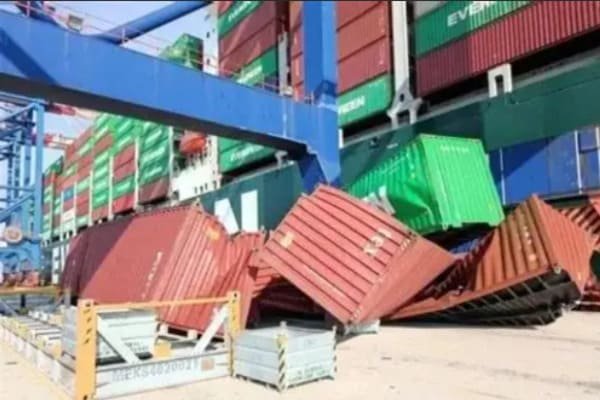
The timeline at Egyptian ports is unforgiving. I cannot stress this enough. The costs for delays escalate incredibly fast. A client shipping construction materials once had a documentation issue that took three weeks to resolve. By the time the cargo was cleared, the demurrage and port storage fees had ballooned to over $10,000. It was a painful lesson. The worst-case scenario is the 3-month auction rule. It's not just a threat; it happens. Customs will sell your goods to the highest bidder to cover the accumulated port fees and duties, and you will get nothing. You lose the goods, you lose the shipping cost, and you lose your money.
The Timeline to Disaster
Understanding the clock is key to avoiding financial catastrophe.
-
Arrival Day 1-8: The Free Period
- Your container arrives. The clock starts immediately.
- You have about one week to get all documents in order, have your buyer pay duties, and clear the cargo.
- This period is very short, which is why having all your paperwork perfect before arrival is so important.
-
Arrival Day 9 - 90: The Demurrage Trap
- Free time is over. Demurrage charges begin.
- These fees are charged per container, per day. They often start small but increase over time.
- For a standard container, this can quickly add up to hundreds of dollars per day.
-
Arrival Day 90+: The Point of No Return
- After three months (around 90 days), Egyptian customs law allows the port authority to seize unclaimed cargo.
- Your goods will be moved to an auction yard and sold off.
- You have no legal recourse to reclaim the goods at this point.
The only way to win this race against time is to be fully prepared for customs clearance before your ship even docks.
What items are prohibited or restricted in Egypt?
You assume your product can be shipped anywhere in the world. But after it arrives in Egypt, you get a notice from customs that your goods are restricted and cannot be imported without a special permit.
Many items are either prohibited or restricted for import into Egypt. Prohibited items, like drones, are banned entirely. Restricted items, like used electronics or certain textiles, require pre-approval from specific government ministries, a process your importer must handle.
It is crucial to know if your product falls into a sensitive category. The list of prohibited and restricted items10 can change, so your buyer must always verify the latest rules with their local customs authorities. I remember a case with a company that tried to ship a container of used auto parts. They assumed it would be fine, but used goods often face heavy restrictions. The shipment was blocked because the importer had not obtained the necessary pre-import inspection certificate and approval from the Ministry of Trade and Industry. The cargo was eventually sent back at the shipper's expense. It was a complete waste of time and money.
Prohibited vs. Restricted: Know the Difference
It is important to understand the two main categories of controlled goods.
Prohibited Items: These are strictly forbidden from entering Egypt. Attempting to ship them can result in seizure and legal action.
Examples:
- Counterfeit or pirated goods
- Narcotics and illicit drugs
- Drones (without specific military/government approval)
- Materials that contradict public morals or religious beliefs
Restricted Items: These items are not banned, but they require special permits, licenses, or approvals from specific Egyptian government bodies before they are shipped. The importer is responsible for securing this approval.
Examples and the responsible authorities:
| Item Category | Typical Requirement | Responsible Authority (Example) |
|---|---|---|
| Pharmaceuticals & Cosmetics | Registration and analysis | Ministry of Health |
| Telecommunication Equipment | Type approval | National Telecom Regulatory Authority (NTRA)11 |
| Used Machinery & Electronics | Pre-import inspection and approval | Ministry of Trade and Industry |
| Certain Textiles & Leather | Quality control inspection | General Organization for Export & Import Control (GOEIC)12 |
Before you sign a contract or ship anything, confirm with your buyer that they have checked the latest regulations and can obtain any necessary permits for your specific products.
Conclusion
Shipping to Egypt is strict but manageable. Follow the rules for the ACID number, documentation, and packaging exactly. If you do this, your cargo will arrive smoothly and without costly delays.
"Egypt Advance Cargo Information (ACI) and New Customs Law - Ocean Network Express (ONE)", https://www.one-line.com/en/news/egypt-advance-cargo-information-aci-and-new-customs-law. Carrier advisory explaining Egypt's mandatory Advance Cargo Information (ACI) system and the 19-digit ACID number required for all imports. Evidence role: requirement; source type: industry. Supports: An ACID number must be obtained before booking, and it must appear on shipping documents or cargo cannot be loaded. Scope note: Carrier advisories reflect operational practice; authoritative rules are set by Egyptian Customs and may be updated. ↩
"Procedures for issuing the ACID number - Nafeza (Egypt National Single Window)", https://www.nafeza.gov.eg/en/faq/What%20are%20the%20procedures%20followed%20for%20issuing%20the%20ACID%20number%20for%20LCL%20containers%20and%20who%20is%20responsible%20for%20submitting%20documents%3F%20/118. Official Nafeza portal FAQ describing how the Egyptian importer obtains the ACID number and submits documents. Evidence role: mechanism; source type: government. Supports: The Egyptian buyer must register on the Nafeza portal to obtain the ACID number before shipment. Scope note: Procedures are administered by Egyptian authorities and may change; the FAQ addresses specific container scenarios. ↩
"CargoX Platform for Egypt ACI - CargoX", https://cargox.digital/egypt/. Official page of CargoX, the blockchain document-transfer platform designated for submitting trade documents under Egypt's ACI system. Evidence role: mechanism; source type: industry. Supports: Exporters must register on CargoX and upload ACID-stamped documents before the vessel departs. Scope note: CargoX is the appointed technology provider; usage requirements follow Egyptian customs regulations. ↩
"What is the Harmonized System (HS)? - World Customs Organization", https://www.wcoomd.org/en/topics/nomenclature/overview/what-is-the-harmonized-system.aspx. Official WCO explanation of the Harmonized System used to classify goods for tariffs and duties. Evidence role: definition; source type: institution. Supports: A correct HS code must appear on the commercial invoice to classify goods for customs and duty assessment. Scope note: National tariff schedules extend the HS with additional digits; rates vary by country. ↩
"Incoterms Rules - International Chamber of Commerce (ICC)", https://iccwbo.org/business-solutions/incoterms-rules/. Official ICC overview of the Incoterms rules, which define the responsibilities of buyers and sellers in international transactions. Evidence role: definition; source type: institution. Supports: Incoterms must be stated on the commercial invoice and define risk and cost allocation such as EXW, FOB, CFR, and DDP. Scope note: The ICC periodically revises Incoterms; parties should specify which version applies. ↩
"Egypt - Import Requirements and Documentation - International Trade Administration", https://www.trade.gov/country-commercial-guides/egypt-import-requirements-documentation. Official U.S. government commercial guide describing Egypt's import documentation requirements, including the bill of lading and consular legalization. Evidence role: requirement; source type: government. Supports: The Bill of Lading must show the ACID number and importer tax ID and match other documents; legalization is required. Scope note: Country commercial guides summarize requirements for exporters; specific rules are enforced by Egyptian Customs. ↩
"Wood Packaging Material for Export - USDA APHIS", https://www.aphis.usda.gov/plant-exports/wood-packaging-material/export. USDA APHIS guidance on ISPM 15 treatment and IPPC marking requirements for wood packaging used in international trade. Evidence role: requirement; source type: government. Supports: Wood packaging must be ISPM 15 treated and bear the IPPC mark or it may be rejected or fumigated at the destination. Scope note: ISPM 15 is an international standard; enforcement details vary by importing country. ↩
"What is a Letter of Credit in Shipping and How Does It Work? - AGI Global", https://www.agi.global/news/what-is-a-letter-of-credit-in-shipping-and-how-does-it-work. Industry explainer describing the letter of credit as a bank guarantee of payment upon presentation of compliant shipping documents. Evidence role: definition; source type: industry. Supports: A Letter of Credit protects the exporter by guaranteeing payment once compliant documents are presented. Scope note: L/C terms and protections depend on the issuing bank and the specific credit conditions. ↩
"Demurrage - Wikipedia", https://en.wikipedia.org/wiki/Demurrage. Reference overview of demurrage, the charges levied when containers remain at a port or terminal beyond the allotted free time. Evidence role: definition; source type: reference. Supports: Demurrage charges accrue daily once a container's free time expires, escalating costs during customs delays. Scope note: Free-time allowances and daily rates vary by port, carrier, and contract. ↩
"Egypt - Prohibited and Restricted Imports - International Trade Administration", https://www.trade.gov/country-commercial-guides/egypt-prohibited-restricted-imports. Official U.S. government commercial guide listing categories of goods that are prohibited or restricted for import into Egypt. Evidence role: general_support; source type: government. Supports: Egypt maintains prohibited and restricted import categories, with restricted goods requiring pre-approval from specific ministries. Scope note: Lists change over time; importers should verify current rules with Egyptian authorities. ↩
"National Telecom Regulatory Authority (NTRA) - Egypt", https://www.tra.gov.eg/en/. Official website of Egypt's National Telecom Regulatory Authority, which oversees type approval for telecommunications equipment. Evidence role: general_support; source type: government. Supports: Telecommunication equipment imported into Egypt typically requires type approval from the NTRA. Scope note: Specific approval procedures are defined by the NTRA and may change. ↩
"General Organization for Export and Import Control (GOEIC) - Egypt", https://www.goeic.gov.eg/. Official website of Egypt's GOEIC, the body responsible for quality control inspection of imported and exported goods. Evidence role: general_support; source type: government. Supports: Certain goods such as textiles and leather require GOEIC quality control inspection before import. Scope note: Inspection requirements and covered product categories are administered by GOEIC and subject to change. ↩