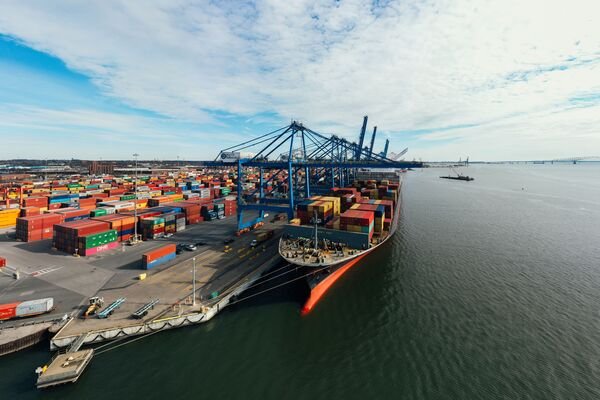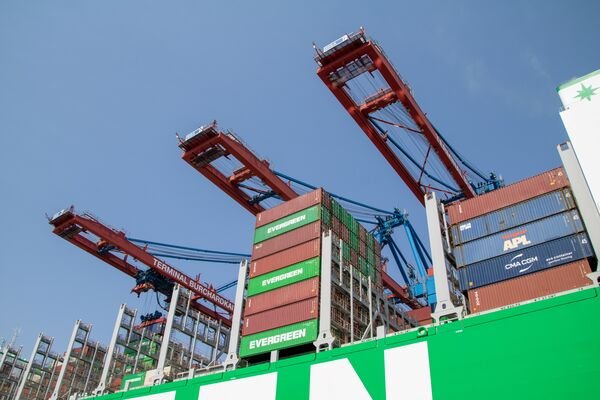


You leave the Canton Fair with orders from six suppliers: homeware from Foshan, lighting from Zhongshan, and outdoor products from Dongguan. Each order looks manageable. Together, they create a shipping problem: different completion dates, different cartons, and several sets of paperwork.
China consolidated shipping can bring compatible orders into one coordinated outbound shipment. The potential benefit is fewer duplicated logistics charges and easier shipment management. Whether it saves money depends on the collection costs, warehouse handling, departure schedule, and destination charges.
Start with three questions: Can the goods travel together? Can the suppliers meet the same shipping window? And can the export and import paperwork support the plan?
What buyer consolidation means
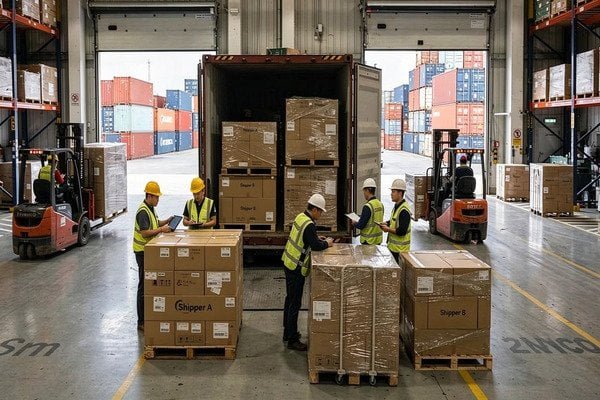
Buyer consolidation combines goods purchased by one buyer from multiple suppliers at an agreed receiving point before onward transport. The warehouse may count cartons, record damage, check shipping marks, and prepare the cargo for dispatch.
The combined shipment can move as FCL, using a container reserved for your cargo, or LCL, sharing container space with other shipments. Buyer consolidation describes how your orders are brought together; LCL describes how container capacity is shared. They are not interchangeable terms.
Physical consolidation also does not automatically produce one invoice, one export declaration, or one import entry. Keep the supplier-level records even when the cargo moves under a coordinated transport arrangement.
Choose consolidation, separate shipments, or a mixed plan
Consolidation is easiest to assess when orders have the same intended importer, compatible routing, similar ready dates, and cargo that can be handled together.
| Shipping approach | When to consider it | Main tradeoff |
|---|---|---|
| Consolidated FCL or LCL | Compatible orders with a shared destination and realistic receiving window | Extra collection and warehouse work; one delayed order may disrupt the plan |
| Separate shipments | Different deadlines, destinations, handling needs, or unresolved compliance issues | More independent bookings and potentially repeated minimum charges |
| Mixed plan | A few urgent items alongside a larger, less urgent purchase | More coordination, but less need to hold every order for the slowest supplier |
A useful mixed plan is to send essential stock separately and consolidate the remaining compatible goods. Air freight may suit some urgent items, but batteries and other restricted cargo need an air-specific assessment before booking.
There is no universal cubic-metre threshold at which FCL becomes cheaper than LCL. Weight, stackability, packaging, route, and destination handling all affect the comparison. A container also does not have to be completely full for FCL to make commercial sense.
Compare the complete logistics cost
Request comparable quotes covering factory collection, warehouse receiving, storage, packing, export handling, main freight, destination handling, customs brokerage, and final delivery. Ask separately about insurance, duties and taxes, inspections, and delay-related charges.
For LCL, confirm the weight-or-measure charging basis and minimum charges at both ends. For FCL, check payload, equipment availability, and the free time and tariffs for terminal storage and container use. Clarify which party pays each item under the purchase contract so the comparison does not count costs twice.
Illustrative example, not a freight quotation: Separate shipments total $3,600 in comparable logistics charges. A consolidated option totals $2,700, including collection and warehouse handling. The initial difference is $900. If waiting for a late supplier adds $450 in storage and $600 in emergency replenishment, consolidation becomes $150 more expensive. Keep duties and taxes consistent between scenarios; combining cargo does not itself create a tax exemption.
Plan the shipment before the suppliers finish production
1. Build one supplier and purchase order register
Ask each supplier for the same information before accepting the final transport quote:
- Company name, factory address, contact person, purchase order number, and proposed exporter.
- Specific product descriptions, materials, intended use, model numbers, quantity, value, and currency.
- Proposed HS classification for broker review; destination tariff codes may require different national digits.
- Carton count, external dimensions, net and gross weight, pallet details, and stacking restrictions.
- Confirmed cargo-ready date, loading arrangements, and agreed Incoterms rule with its named place.
- Battery, liquid, aerosol, chemical, magnetic, or other special cargo characteristics.
- Applicable product documents, brand authorization, and any transport or export permits requiring review.
Use product descriptions such as “stainless steel kitchen storage racks” rather than “accessories.” Ask suppliers to disclose batteries inside equipment and liquids inside kits. A finished product can contain a component that changes its transport requirements.
2. Agree the handover responsibilities
Do not choose EXW simply because it appears to make collection easier. Under EXW, the seller generally makes goods available without loading the collecting vehicle or clearing them for export. The buyer must arrange a workable export process.
FCA at a precisely named place is often worth discussing for containerized shipments. The seller handles export clearance; at the seller’s premises, delivery includes loading the buyer’s collecting vehicle. A different named place changes the handover mechanics. ICC’s Incoterms 2020 checklist helps distinguish these options.
Suppliers do not all have to use the same term to participate in consolidation. Instead, record who pays and arranges factory loading, trucking, warehouse unloading, export formalities, and terminal charges for each order. Do not assume an existing FOB price already fits delivery to an inland consolidation warehouse.
3. Set a receiving deadline and a fallback decision
Work backward from the required arrival window. Confirm the booking, document, dangerous goods, warehouse, and terminal cutoffs relevant to the shipment; these are different deadlines.
Build in time for cargo checks and corrections before the applicable cutoffs. Ask the warehouse to confirm its free storage period, charging basis, and treatment of early arrivals. A supplier’s production completion date is not the same as the date cargo can be collected.
Agree in advance: if one supplier misses the receiving deadline, will you wait, ship the ready goods, or send the late order separately? Name the person authorized to make that decision.
4. Give every supplier the same receiving instructions
Issue the warehouse address only after the facility has accepted the cargo type. Provide delivery booking instructions, receiving hours, contact details, and the shipment reference.
Ask suppliers to mark cartons with the buyer reference, supplier code, PO number, item reference, and carton sequence. Match those marks to the packing list. Any relabeling must preserve required product, origin, safety, and transport markings.

5. Check incoming cargo before authorizing dispatch
Request a receiving report with carton counts, measured weight and volume, shipping marks, and photographs of visible damage. Reconcile shortages, incorrect labels, and packaging problems while the goods are still in China.
Basic warehouse receiving is not a product quality inspection. Opening cartons, sampling goods, functional testing, and checking specifications need an agreed inspection scope. Decide who can authorize repacking, reject goods, and approve extra costs.
For fragile, bulky, or dense products, review palletization, stacking limits, load distribution, and securing arrangements. Repacking can improve space use, but should not sacrifice protection or invalidate compliant dangerous goods packaging.
Keep multi-supplier customs declarations traceable
One container can carry cargo covered by multiple export declarations. Conversely, an appropriately structured export arrangement may support goods sourced from several factories through one exporter. The declaration structure must follow the real transaction and applicable customs requirements, not the number of containers.
Ask the Chinese customs broker to confirm the following before loading:
- Separate exporter arrangements: Identify the exporter for each order, the supporting supplier documents, and how declarations will be linked to the booking and manifest.
- A common exporter or export agent: Confirm the genuine contractual role, authorization, purchase records, and the treatment of supplier invoicing and any export tax refund. A common exporter does not automatically make one declaration appropriate.
- A supplier unable to export directly: Establish a documented, lawful export arrangement. Do not substitute unrelated company details or purchase paperwork merely to disguise the actual transaction.
China’s GACC Order No. 277, effective May 1, 2025, requires relevant customs registration and truthful, accurate, complete declarations. Using a broker does not remove the parties’ applicable legal responsibilities.
Market procurement trade, customs code 1039, is a specific regulated route, not a generic shortcut for small factories. GACC’s framework requires eligible operators and goods sourced through recognized market clusters, with a maximum value of US$150,000 per declaration and specified exclusions. Confirm eligibility and current local procedures before relying on it. Attending the Canton Fair does not itself establish eligibility. See GACC Announcement No. 221 of 2019.
Preserve each product’s identity and value. Different products may correctly have different tariff classifications and descriptions; standardizing document templates does not mean forcing unlike goods into one code. A shipment summary should reconcile the underlying records, not replace them with an artificial invoice.
For destination clearance, ask the importer’s broker to confirm the entry structure and valuation treatment. As an example, the EU calculates duty using tariff classification, customs value, and origin; transaction value is the principal valuation method, subject to prescribed adjustments. Consolidation does not change those fundamentals. See the European Commission’s customs duty guidance.
Assess batteries and dangerous goods before warehouse delivery
Do not book a shipment of batteries or energy storage equipment as ordinary cargo based only on a supplier’s product name. Have a competent dangerous goods specialist confirm the classification, packaging, documentation, and acceptance conditions for the actual configuration and transport mode.
For example, standalone lithium-ion batteries and batteries packed with or contained in equipment can fall under different entries, commonly UN 3480 and UN 3481 respectively. An energy storage system should not automatically be assigned UN 3480: its design and installation can change the assessment. Obtain the confirmed UN number and proper shipping name before booking.
For normal commercial lithium battery shipments, request the applicable UN 38.3 test summary and confirm that it matches the battery design. Prototype, damaged, defective, or recalled batteries require separate review. A safety data sheet can support assessment, but it is not a replacement for the relevant testing evidence or shipment documents. PHMSA’s lithium battery resources explain these distinctions and link to test-summary guidance.
For ocean transport, IMO identifies the IMDG Code 2024 Edition, Amendment 42-24, as mandatory from January 1, 2026. Have the specialist check the edition applicable to the sailing, its provisions, and any relevant corrections. See IMO’s current IMDG publication information.
Can dangerous goods travel with general cargo
There is no universal rule that every battery shipment must use its own container, and no universal permission to mix it with ordinary goods. The decision depends on classification, applicable segregation and stowage provisions, packing, and the specific cargo combination. IMO explains that the IMDG Code addresses individual substances and segregation of incompatible goods.
Also obtain acceptance from the warehouse and actual carrier for the route, including transshipment arrangements. They may impose stricter conditions or decline a particular LCL service. Do not assume that food, textiles, or household products can share space with a declared dangerous goods shipment simply because space is available.
Confirm required marks, labels, declarations, packing certification, and any Chinese inspection or packaging documentation applicable to the goods. Review insurance terms and exclusions. Keep unapproved battery or chemical cargo outside the ordinary consolidation plan until the responsible parties accept it.
Match product and packaging checks to the destination
Different Canton Fair products need different checks. For electrical and other regulated products sold into the EU, identify the applicable legislation and conformity documentation. CE marking is required only for covered product categories; it is not a universal import certificate. The European Commission’s CE marking guidance explains the roles of manufacturers, importers, and distributors.
For other destinations, have the importer identify the relevant product safety, radio, labeling, licensing, and environmental obligations. Do not treat CE, FCC requirements, or extended producer responsibility registrations as an interchangeable checklist for every product and country. Branded goods also merit an early review of authenticity and authorization records.
For wooden pallets, crates, and dunnage, check the destination’s implementation of ISPM 15. Covered raw wood packaging needs compliant treatment and marking; fumigation is not the only approved treatment. Packaging made wholly from qualifying processed wood, such as plywood, can be exempt. A plywood crate with raw wood supports still needs assessment. See the IPPC ISPM 15 standard.
Confirm transport documents and the delivery scope
Review draft transport documents before issuance. Confirm the shipper, consignee, notify party, cargo particulars, freight terms, and release method. Depending on the booking, the carrier may issue a master bill of lading and the forwarder may issue one or more house bills. Agree the structure with the forwarder and destination broker, including any bank or payment requirements.
The bill of lading structure does not determine how many customs declarations are legally required. A single transport document also does not guarantee that all cargo will clear without inspection. One held consignment can disrupt the container’s movement; whether other goods can be released separately depends on local procedures and handling arrangements.
Check what a DDP quotation actually covers
DDP is an Incoterms rule for a sale contract. It generally places export and import formalities, duties and taxes, and delivery to the named destination on the seller, with goods ready for unloading. A freight forwarder’s “DDP service” quote does not, by itself, rewrite the supplier’s sales contract.
Before accepting such a quote, establish the lawful importer arrangement and who will hold the customs and tax records. ICC highlights that foreign sellers may face restrictions or practical barriers to import clearance; DAP may be more suitable where the buyer handles import formalities. See ICC’s national regulatory barriers guidance.
Get written confirmation of the named delivery point, included duties and taxes, exclusions, inspection costs, storage, unloading, and final-mile access requirements. For multiple suppliers, check how the service contract coordinates their individual sale terms. Avoid a low “all-in” price that depends on incorrect values or an unexplained importer identity.
- All suppliers have confirmed ready dates, receiving instructions, and identifiable carton marks.
- The warehouse has accepted the goods and resolved receiving discrepancies.
- Cargo compatibility and any dangerous goods conditions have been approved for the route.
- The exporter arrangements, declarations, invoices, and packing lists reconcile.
- The destination importer and broker have reviewed product requirements and the clearance plan.
- The comparison includes origin and destination charges, storage exposure, and insurance scope.
- Draft transport documents and release instructions are correct.
- Someone has authority to split the shipment if a supplier misses the deadline.
Frequently asked questions
Can I combine orders from several Canton Fair suppliers into one shipment?
Yes, where routing, timing, handling, documentation, and cargo compatibility support it. The goods can be gathered at an agreed warehouse and move as FCL or LCL. Confirm acceptance before suppliers dispatch their goods.
Will consolidation reduce my freight cost?
It can reduce repeated logistics charges, but collection, storage, extra handling, and waiting can offset the benefit. Compare the same transport and delivery scope for separate and consolidated options. Do not rely only on the ocean freight rate or assume a universal FCL break-even volume.
Does one container mean one customs declaration?
No. The export declaration structure follows the exporter arrangements, transaction records, goods, and applicable procedures. Multiple declarations may relate to one container. Destination import entries must be checked separately with the importer’s broker.
Can lithium batteries be consolidated with other products?
Sometimes, subject to the actual classification, packing, segregation requirements, and warehouse and carrier acceptance. Some services will not accept the combination. Disclose batteries early and obtain a shipment-specific assessment before putting them into a general cargo consolidation plan.
Plan your Canton Fair shipments with Deeplinker
Once your supplier list is ready, bring the orders together on paper before moving the cargo. Send Deeplinker the supplier locations, cargo descriptions, carton dimensions, weights, ready dates, agreed trade terms, and destination address. Flag batteries, chemicals, and other special cargo at the outset.
Ask our China freight forwarding team to assess a consolidation plan against separate shipment options, including collection, warehouse coordination, export documentation, ocean transport, and the delivery services available for your route. The proposed scope should reflect your cargo, timing, and importer arrangements.
Request a China consolidation shipping plan from Deeplinker and share your supplier list to start the discussion.