
Struggling with complex customs on international truck routes? The paperwork and delays can feel overwhelming, but understanding the right system can make all the difference for your business.
The best system depends entirely on your specific shipping needs. TIR is designed for long-distance, multi-country transit, like from Europe to Asia, using a single customs document. GMS is for frequent, regional trade within Southeast Asia, simplifying border crossings1 between neighboring countries.
Choosing the right transport system is one of the most important decisions you can make for your supply chain. It directly impacts your shipping times, costs, and overall efficiency. Getting it wrong leads to delays and unexpected fees, but getting it right can give you a serious competitive edge. In this guide, I'll break down everything you need to know about two major systems, TIR and GMS, so you can see which one is the perfect fit for your cargo. Let's dive in and make your road transport simpler and more effective.
What Are TIR2 and GMS3?
Heard acronyms like TIR and GMS but aren't sure what they mean? Using the wrong one can lead to costly mistakes and hold up your shipments at the border.
TIR stands for Transports Internationaux Routiers, a global customs transit system that lets goods travel across multiple borders with minimal intervention. GMS is the Greater Mekong Subregion agreement, which simplifies transport and trade between six specific countries in Southeast Asia.
To really understand these systems, you need to know what problem each one solves. The TIR system was created after World War II to help rebuild trade across a divided Europe. The goal was to let a truck be sealed at its starting point, like in Spain, and drive all the way to its destination, say in Russia, without being opened for a full customs inspection at every border it crossed. It's all about secure, long-distance transit.
GMS, on the other hand, is much more recent and regional. It was established to boost economic cooperation among the countries that share the Mekong River. It’s less about a single sealed journey and more about making frequent, everyday trade easier between neighbors like Thailand and Vietnam. It harmonizes rules for vehicles, drivers, and customs processes to reduce friction for regional supply chains.
| Feature | TIR (Transports Internationaux Routiers) | GMS (Greater Mekong Subregion) |
|---|---|---|
| Primary Goal | Facilitate long-distance international transit | Promote regional economic integration |
| Governing Body | United Nations (UNECE) | Asian Development Bank (ADB) & Member Govts |
| Core Concept | Sealed cargo moves under a single guarantee | Harmonized rules for cross-border trade |
Geographic Coverage: Global vs Regional?
Are your trucks crossing borders in Europe, Asia, or both? Choosing a system with the wrong geographic reach is like using a map for the wrong city—it will get you lost.
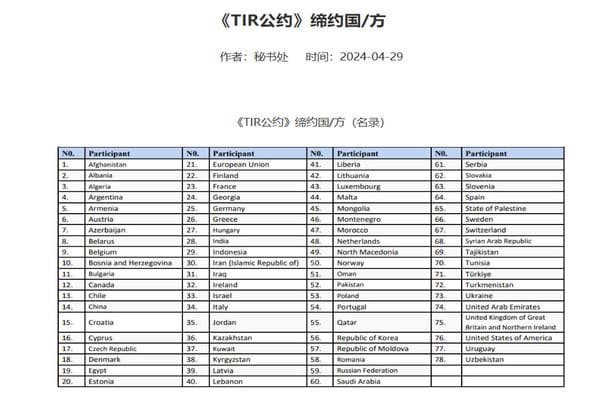
TIR is a global system with over 70 member countries across Europe, Asia, the Middle East, and North Africa. GMS is strictly regional, covering only the six countries of the Greater Mekong Subregion: Cambodia, China (specifically Yunnan and Guangxi), Laos, Myanmar, Thailand, and Vietnam.
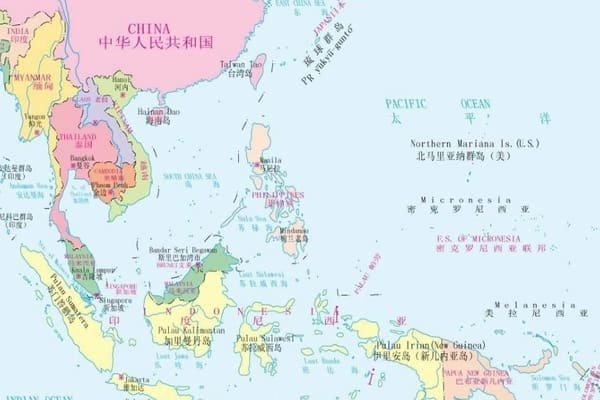
The difference in coverage is the clearest way to see how these systems are built for different jobs. TIR’s strength lies in its vast network. If I need to move a container from a factory in Germany all the way to our hub in Shenzhen, China, the TIR system is perfect. The truck can cross Poland, Belarus, Russia, and Kazakhstan under a single customs document, saving huge amounts of time. It connects major economic blocs.
GMS is focused on a very specific, and very important, economic zone. It connects the major trade corridors within Southeast Asia, like the North-South Economic Corridor. If a client needs me to move electronics from an assembly plant in Thailand to a distributor in Hanoi, Vietnam, GMS is the tool for the job. It's designed for high-frequency movements within this fast-growing region. You wouldn't use GMS to go to Turkey, and you wouldn't use TIR for a short hop between Laos and Thailand.
| System | Key Member Countries/Regions | Best for Routes Like... |
|---|---|---|
| TIR | EU, Russia, Turkey, China, Central Asia, Middle East | Portugal to Iran, China to Germany |
| GMS | Thailand, Vietnam, Cambodia, Laos, Myanmar, China | Bangkok to Ho Chi Minh City, Kunming to Vientiane |
Core Mechanisms: Carnet vs TAD?
Customs paperwork can be a real headache. One missing signature or incorrect form can bring your entire shipment to a grinding halt, costing you time and money.
TIR’s core is the TIR Carnet, a single, passport-like document that acts as a customs declaration4 and a guarantee for duties and taxes. GMS uses a framework of harmonized procedures, often involving a Transit and Customs Declaration (TAD), rather than one single universal document.
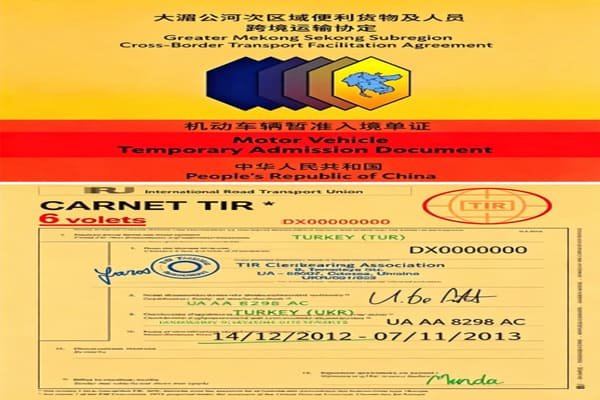
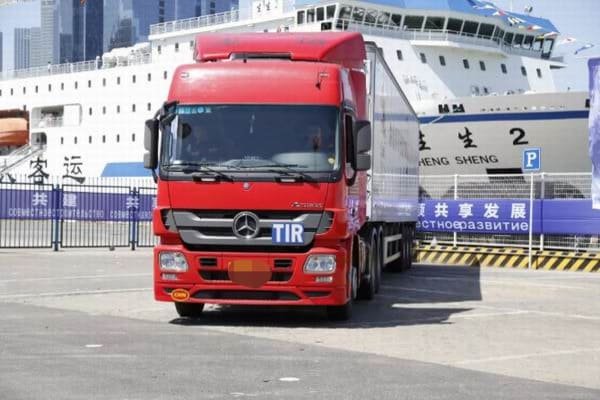
Let's break down how these work in practice. When we use TIR, the process is very standardized. The truck is inspected and sealed at the origin. The driver carries a TIR2 Carnet, which has a pair of vouchers for each country they will cross. At each border, a customs officer just checks the seal, stamps a voucher, tears it out, and lets the truck continue. The cargo itself isn't touched until the final destination. The carnet itself is backed by an international guarantee chain, so customs authorities know any potential duties are covered.
GMS is different. It’s not based on a single document but on a set of agreements called the Cross-Border Transport Agreement5 (CBTA). This agreement means the six member countries recognize each other’s vehicle inspections, driver's licenses, and customs controls. So, instead of a global passport like the carnet, you're using a system of mutual trust and simplified local documents, like the TAD, to speed things up at specific, designated border crossings. It's more flexible but less standardized than TIR.
| Mechanism | TIR System | GMS System |
|---|---|---|
| Key Document | TIR Carnet | Transit and Customs Declaration (TAD) & others |
| Process | Sealed load, voucher per country | Harmonized procedures at specific crossings |
| Guarantee | International guarantee chain | Based on bilateral/multilateral agreements |
Cost Comparison: Which One Saves More Money?
Logistics costs are a huge part of your budget. Choosing the more expensive transport option for your route can shrink your profit margins or even make a product line unviable.
Neither system is universally "cheaper." TIR saves money on long, multi-country routes by eliminating transit fees and customs broker costs at each border. GMS saves money on high-volume, regional routes by drastically reducing border crossing times and administrative overhead6.

The cost savings come from different places. With TIR, there is an upfront cost to purchase the TIR Carnet and to be part of the guarantee system. However, think about a shipment from China to the UK. Without TIR, I would have to hire a customs broker7 in every country the truck passes through—that's a lot of fees. With TIR, those costs disappear. The savings on administrative fees and the time saved by not waiting for inspections easily outweigh the carnet fee on such a long journey.
With GMS, the savings are all about speed and frequency. For a company shipping goods daily between Thailand and Laos, the primary cost is time spent at the border. The GMS agreement streamlines this process, turning a multi-hour ordeal into a much faster clearance. While there are still customs duties to be paid at the final destination, the operational savings from reduced waiting times and simplified paperwork on these high-frequency routes add up very quickly. The cost per trip is lower because the process is so efficient.
| Cost Factor | TIR Savings | GMS Savings |
|---|---|---|
| Main Savings | Avoids per-border broker fees and transit taxes. | Reduces waiting times and administrative work. |
| Best Use Case | Low-frequency, long-distance, multi-country routes. | High-frequency, short-distance, regional routes. |
| Example | Cheaper for a single trip from Spain to Kazakhstan. | Cheaper for 100 trips from Bangkok to Vientiane. |
Cargo Suitability: What Should You Ship?
Not all cargo is created equal in the eyes of customs. Using a transport system that isn't designed for your specific type of goods can lead to rejection at the border.
TIR is excellent for a wide variety of goods that can be securely sealed in a truck or container, making it ideal for high-value electronics or standard manufactured products. GMS is particularly well-suited for the fast-moving goods that drive regional economies, like agricultural products and consumer goods.
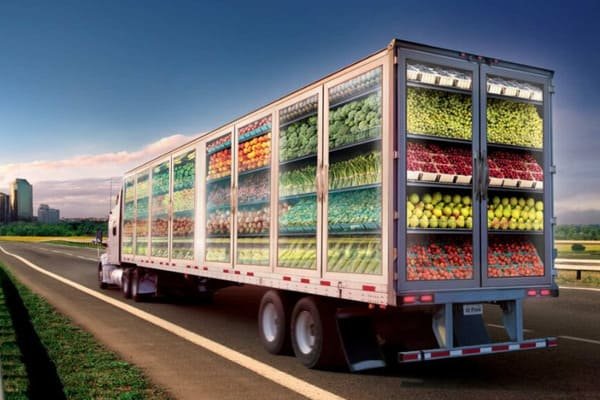
The key requirement for TIR is that the cargo must be loaded in a way that allows for a secure customs seal. The whole system is built on the principle that the load remains untouched from origin to destination. This makes it perfect for shipping a container full of smartphones from China to Europe or textiles from Turkey to Russia. The integrity of the seal guarantees the integrity of the cargo. However, TIR has strict international restrictions on carrying large quantities of alcohol and tobacco.
GMS is more about facilitating the specific types of trade that happen within the Mekong region. This includes a lot of agricultural products, like fresh fruit from Vietnam being trucked to markets in China. It also includes components for manufacturing supply chains, such as parts moving from a factory in one country to an assembly plant in another. Because the distances are shorter and the crossings are frequent, the system is designed for speed and efficiency for these types of perishable or time-sensitive goods. The rules can be more about what is agreed upon between two neighboring countries than a single global standard.
| System | Ideal Cargo Types | Key Requirement |
|---|---|---|
| TIR | Electronics, textiles, machinery, general merchandise. | Cargo must be in a sealable load compartment. |
| GMS | Agricultural products, consumer goods, auto parts. | Compliance with bilateral trade agreements. |
Qualification & Access: Can Your Company Use These?
You see the benefits and want to start using these systems. But you can't just decide to use them—strict requirements and qualifications could lock your company out if you're not prepared.
To use TIR, a transport company must be formally approved by its national guaranteeing association, which involves proving financial stability and having a solid operational history. Access to GMS requires getting specific permits under the CBTA, which means meeting vehicle and driver standards recognized by the member countries.

Getting authorized for TIR is a serious process. As a logistics provider8, we had to apply to our national association, which is part of the International Road Transport Union (IRU). They vetted our company's finances, our track record for compliance, and our operational security. We also have to provide a financial guarantee to cover any potential customs duties. Finally, our trucks must be inspected and certified as "TIR-approved," meaning they can be securely sealed. It's a high bar, but it ensures everyone in the system is trustworthy.
Accessing the GMS system is more of a government-level process. The GMS permits are exchanged between the governments of the six member countries, often in limited quotas. A company like ours needs to apply for these permits. Our vehicles must meet the specific technical standards agreed upon in the CBTA, covering things like weight, emissions, and safety features. Our drivers also need special licenses recognized across the region. The key here is not just meeting a standard, but being officially admitted into the system by the relevant authorities, which is why working with an established partner is so crucial.
| Requirement | TIR System | GMS System |
|---|---|---|
| Operator Approval | Must be authorized by a national association. | Must obtain permits from government authorities. |
| Vehicle Certification | Trucks must be certified for customs sealing. | Vehicles must meet agreed regional standards. |
| Governing Body | National associations and the IRU. | National ministries of transport. |
The Latest Trend: TIR + GMS "Dual Drive"?
Your supply chain is global, spanning markets in both Europe and Southeast Asia. Relying on different partners for each system is inefficient, complex, and adds risk to your operations.
The "Dual Drive" strategy is not about using both systems on one shipment. It means a single, forward-thinking logistics provider8 gets certified in both TIR and GMS. This allows them to offer a seamless, one-stop solution for clients with diverse global and regional shipping needs.
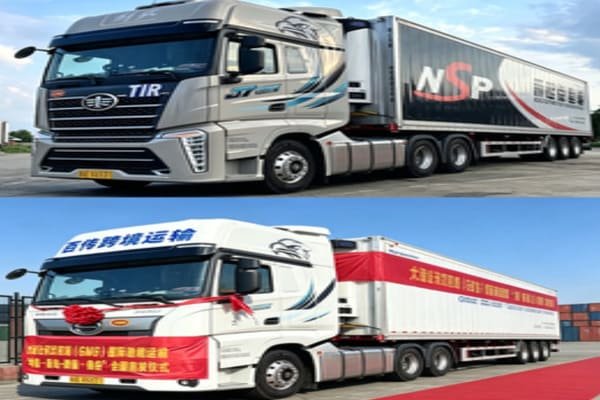
In my experience, TIR and GMS aren't competitors at all; they are complementary tools in a complete logistics toolbox. A truly global business often needs both. This is where the "Dual Drive" approach comes in, and it's something we've invested in heavily at DeepLinker. Imagine you need to ship high-tech components from your supplier in Germany to an assembly plant in Vietnam. We can manage the entire journey. We use the TIR system to efficiently truck the goods overland from Germany to our major logistics hub in Shenzhen, China.
Once the goods arrive, they are now inside the GMS region. From our Shenzhen hub, we can then use our GMS permits to truck the components directly to the final destination in Vietnam, clearing the border quickly and efficiently. The client gets one point of contact and one invoice for a complex, multi-system journey. This is no longer a theoretical idea—major logistics hubs in China are actively pursuing and promoting this dual certification9. It’s the modern, efficient way to connect Europe and Southeast Asia by road.
Conclusion
TIR and GMS are not rivals; they are specialized tools for different jobs. The right choice depend
Learn about the common challenges faced during border crossings and how to overcome them. ↩
Explore the TIR system to understand how it facilitates long-distance international transit with minimal customs intervention. ↩
Learn about the GMS agreement and how it simplifies trade and transport between six Southeast Asian countries. ↩
Understand the importance of customs declarations in international shipping and how to complete them correctly. ↩
Explore the CBTA and its role in facilitating trade and transport in the Greater Mekong Subregion. ↩
Discover strategies to minimize administrative overhead and improve operational efficiency in logistics. ↩
Discover the role of customs brokers in international shipping and how they can help streamline the process. ↩
Understand the key factors to consider when selecting a logistics provider for your shipping needs. ↩
Learn about the benefits of dual certification in logistics for companies operating in multiple regions. ↩