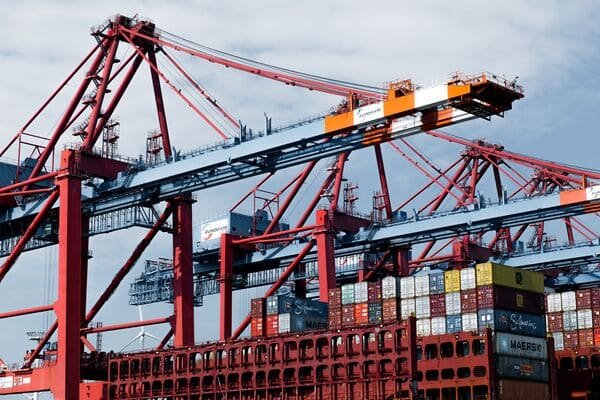

War Risk Surcharge vs Cargo War Risk Insurance for Middle‑East Shipping
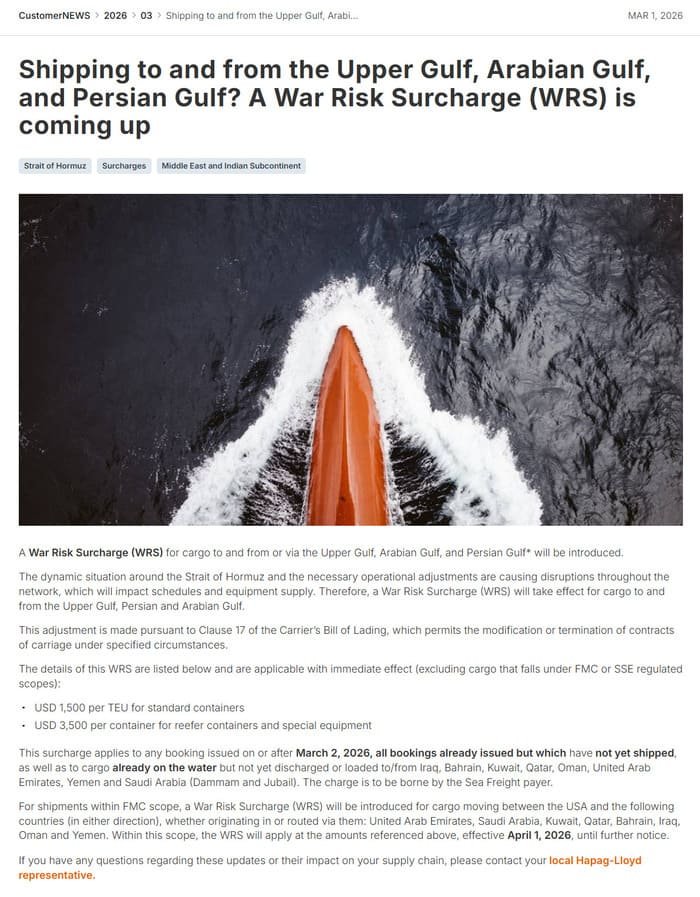
With ongoing tensions across the Middle‑East, carriers are applying War‑related surcharges for vessels transiting the Red Sea, Bab‑el‑Mandeb and Strait of Hormuz.
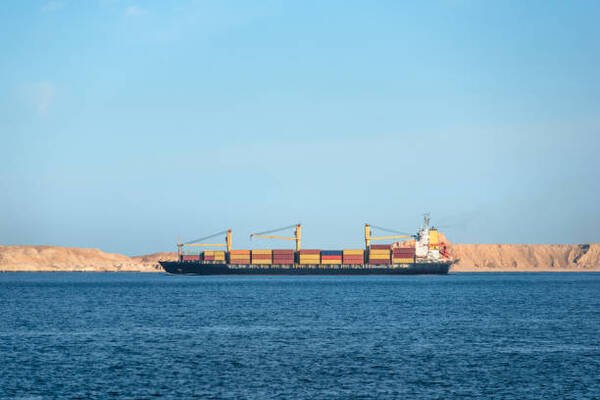 A common costly misunderstanding: many shippers believe that paying the carrier’s war risk surcharge means their cargo is covered against war‑related losses. This is NOT true.
1. Carrier’s War Risk Surcharge (WRS / ECS / WRP)
This is a freight surcharge, NOT cargo insurance.
According to Lloyd’s Joint War Committee (JWC) circular JWLA‑033, the Persian Gulf, Strait of Hormuz and Red Sea are designated high‑risk zones. When vessels sail into these areas, ship‑owners must purchase expensive hull war risk insurance for their vessels. This extra cost is passed on to shippers as WRS / ECS / WRP surcharges.
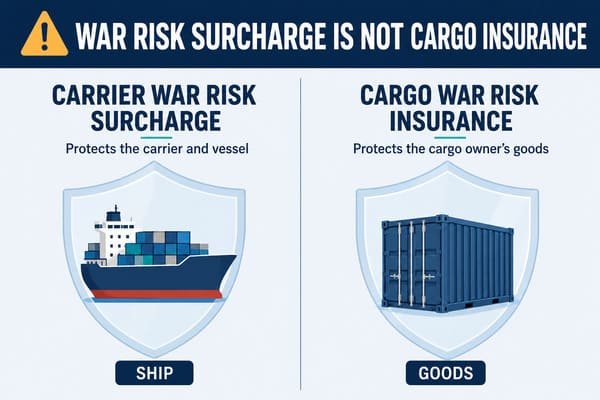
- ✅ What it covers: the vessel and ship‑owner’s property only
- ❌ What it does NOT cover: your goods inside the container.
If a vessel is hit by missile or drone, the vessel’s loss is covered by ship‑owner’s hull war insurance. Damaged or lost cargo will NOT be compensated under this surcharge.
Important note: Surcharges depend on the vessel’s actual sailing route, not just the destination port.
- Vessel transiting Strait of Hormuz / Red Sea high‑risk zone → WRS / ECS applies
- Vessel routing via Cape of Good Hope (no entry into high‑risk waters) → no war‑risk surcharge, but higher re‑routing surcharges may apply.
Major carriers including Hapag‑Lloyd, CMA‑CGM, Maersk, MSC, ZIM, COSCO SHIPPING and ONE have implemented such surcharges. Rates fluctuate subject to insurance market conditions, until further notice.
2. Shipper‑owned Cargo War Risk Insurance (Institute War Clauses CL385)
Standard marine cargo insurance Institute Cargo Clauses A (ICC‑A) automatically excludes war risks. War, missile strike, mines and armed conflict losses will be declined under ordinary all‑risk cover.
To get war‑risk protection for your cargo on Middle‑East lanes, you must buy separate cargo war risk insurance from an insurer. A separate insurance policy will be issued.
- ✅ Covers: cargo loss or damage caused by missile attacks, mines, war‑related armed incidents. SRCC (Strikes, Riots and Civil Commotions) cover can be added additionally.
- ⚠️ Exclusions: nuclear risks are not covered.
- ⚠️ Special reminder: For dangerous goods, lithium batteries and chemical cargo to Persian Gulf ports, underwriting becomes strict. Some insurers may limit or decline cover. Confirm insurability before vessel booking.
Quick Comparison Table
| Item | Carrier’s WRS / ECS War Risk Surcharge | Shipper’s Cargo War Risk Insurance (CL385) |
|---|---|---|
| Issued by | Ocean carrier, shown on freight invoice | Insurance company / broker, separate policy |
| Insured subject | The vessel / ship‑owner’s hull | Your containerized cargo |
| Cargo war‑loss payout | No compensation for cargo damage | Payable subject to policy terms |
| Automatic trigger | Applied when vessel enters JWC high‑risk waters | Not included in ICC‑A; must be purchased separately |
Practical Shipping Tips
- Clarify with your forwarder: Paying war‑risk surcharge does NOT equal war insurance for cargo. This is a frequent pitfall for importers & exporters.
- At booking, double‑check the actual vessel route: whether the ship will pass JWC‑listed high‑risk waters, and whether WRS / ECS is included in the all‑in rate.
- Under CIF Incoterms: without explicit contract agreement, the seller is NOT obligated to purchase cargo war risk insurance. Who bears war‑risk premium shall be agreed in advance between buyer and seller.
- Many Middle‑East L/C letters of credit explicitly require insurance policy including war risk coverage.
One‑sentence takeaway: Carrier’s war surcharge protects the ship. Cargo war‑risk insurance protects your goods.
Note: MSC, COSCO SHIPPING and ONE do not maintain public webpages for surcharge announcements. Surcharges are released via carrier circulars and booking system pop‑ups.