
Shipping dangerous goods feels complicated and full of risk. A simple mistake in stowage can lead to huge fines or port rejection1, costing you time and money.
DG stowage rules, primarily from the IMDG Code, dictate how hazardous materials must be positioned and secured on a ship. Following these rules is essential to prevent dangerous reactions, ensuring the safety of the crew, cargo, and the marine environment during transit.
Navigating the world of dangerous goods shipping can feel like trying to read a map in a foreign language.2 The rules are not just a single list; they are a complex system built over decades to prevent disasters at sea. I remember a case early in my career where a client tried to ship two different chemicals in the same container to save costs. Luckily, our team caught it. If they had mixed, they would have created a highly toxic gas. That experience taught me that when it comes to DG, there are no shortcuts. You have to get it right every time. Let's break down exactly what that means for your shipments.
What are the stowage rules for different types of dangerous goods?
You know there are rules for shipping DG, but they seem overwhelming. Each class has specific requirements, and getting one wrong could have fiery, explosive, or toxic consequences.
Stowage rules are specific to each DG class. For example, explosives (Class 1) demand maximum separation3, while flammable liquids (Class 3) must be kept far from heat4. Corrosives (Class 8) need placement where leaks won't compromise the ship's structure.
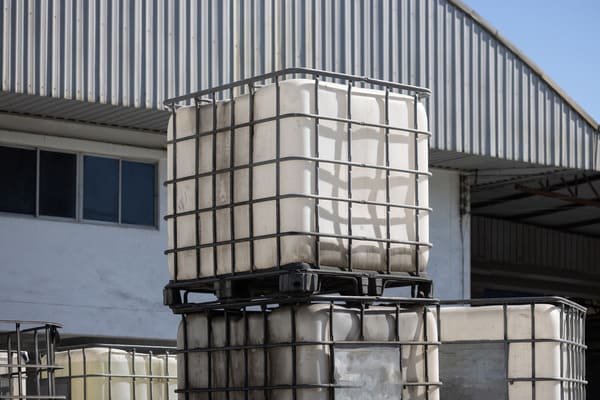
When we talk about stowage, we're not just talking about where a container goes on the ship. The IMDG Code gets very specific using "Stowage Categories" to simplify instructions for the vessel planner.5 These categories are critical for ensuring safety.
Stowage Categories Explained
The IMDG Code assigns a Stowage Category from A to E for most dangerous goods. This tells the ship's crew where the container can be safely placed. For instance, Category A is the most flexible, allowing stowage "on deck or under deck." In contrast, Category D means "on deck only,"6 which is often required for substances that could release dangerous gases, so they can ventilate into the open air. You must always check the Dangerous Goods List for your specific product to find its assigned category.
Class-Specific Requirements
Different hazards require different precautions. A one-size-fits-all approach doesn't work. Here’s a simple breakdown of what that looks like in practice.
| DG Class | Common Name | Key Stowage Rule | Example |
|---|---|---|---|
| Class 2 | Gases | Stow away from heat sources and living quarters; "on deck" is preferred. | Aerosols, Propane Tanks |
| Class 3 | Flammable Liquids | Keep away from heat and ignition sources. Requires good ventilation. | Alcohols, Paints, Gasoline |
| Class 5.1 | Oxidizing Substances | Must be separated from flammable materials as they can intensify fires. | Ammonium Nitrate, Peroxides |
| Class 8 | Corrosive Substances | Stow where leaks won't contact the ship's steel structure or other cargo. | Battery Acid, Strong Cleaners |
Understanding these basic principles is the first step in ensuring your dangerous goods are stowed correctly and safely for their journey across the ocean.
Which dangerous goods are prohibited from being loaded together?
You're trying to consolidate a shipment with multiple DG items to be efficient. But you are not sure if they can even be in the same container without causing a problem.
Dangerous goods that can react hazardously with each other cannot be loaded together. The IMDG Segregation Table is the official guide, clearly stating which classes must be kept apart7. For example, acids (Class 8) and cyanides (Class 6.1) must always be separated.
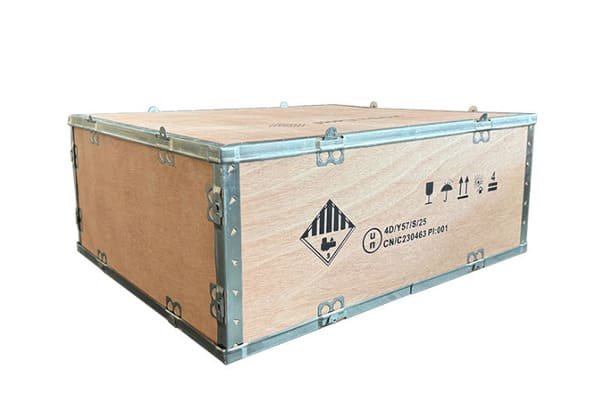
The core principle behind mixed loading prohibitions is simple: prevent chemical reactions.8 Certain chemicals, when mixed, can produce heat, fire, toxic gases, or even an explosion. The IMDG Code provides a very clear "Segregation Table" that acts as the ultimate guide for what can and cannot be near each other. This isn't just about different containers on the same ship; it also applies to different packages within the same container, a concept known as segregation within a CTU (Cargo Transport Unit).
Understanding the Segregation Table
The table uses numbers and terms to define the required distance between incompatible goods. The main terms you'll see are:
- "Away from": Requires a minimum separation of 3 meters.
- "Separated from": Requires a minimum separation of 6 meters.
- "Separated by a complete compartment or hold from": This means they must be in entirely different physical sections of the ship.
Real-World Segregation Examples
Let's look at why this is so important.
- Acids (Class 8) and Metals: If a container of strong acid leaks onto powdered metals, it can create flammable hydrogen gas.9 This is why they must be "separated from" each other.
- Oxidizers (Class 5.1) and Flammables (Class 3): An oxidizer provides oxygen, which can cause a small fire to become a massive, uncontrollable blaze.10 They must be kept well apart.
- Acids (Class 8) and Cyanides (Class 6.1): This is one of the most dangerous combinations. If they mix, they produce hydrogen cyanide, a fast-acting and deadly poison gas.11 They require the strictest levels of segregation.
Ignoring these rules is not just a compliance issue; it's a gamble with people's lives and the environment.
How we provide professional stowage solutions and full DG shipping services?
You need to focus on your business, not become a chemical logistics expert overnight. But the risk of getting DG wrong is high, and the effort to get it right is overwhelming.
We provide a complete DG shipping service. Our expert team verifies your documents, creates compliant stowage plans, and coordinates with carriers. We handle the entire complex process for you, ensuring your goods ship safely, compliantly, and without delays.

Over my 20 years in this industry, I've seen firsthand how much stress DG shipping causes for business owners like David. Your expertise is in making great products, not navigating the 1,000+ pages of the IMDG Code. That's where we come in. We take that entire burden off your shoulders, so you can focus on what you do best. Our goal is to make the complex simple and to provide you with absolute peace of mind.
Our Step-by-Step DG Handling Process
We have a proven process to ensure nothing is missed:
- MSDS Review: It all starts here. We analyze your Material Safety Data Sheet to understand your product's exact nature and requirements.12
- Classification & Packaging Check: We confirm the UN Number, Class, and Packing Group.13 We also advise on whether your packaging is compliant for sea transport.
- Stowage & Segregation Plan: Our experts create a precise plan. We determine the correct Stowage Category and ensure full compliance with segregation rules, even for complex mixed-cargo containers.
- Carrier Booking & Coordination: We only work with carriers certified to handle your specific DG. We communicate all requirements to them clearly to prevent any issues at the port.
- Documentation: We prepare the all-important Dangerous Goods Declaration (DGD) and ensure all paperwork is perfect for a smooth customs process.
Beyond Stowage: Our Comprehensive Services
Our service doesn't stop at stowage. We are your end-to-end logistics partner. This includes handling ISO Tanks for bulk liquids, managing oversized and project cargo, and providing Ro-Ro services. We offer warehousing, last-mile delivery, and real-time tracking, giving you the full visibility and reliability you need to manage your supply chain effectively. We turn your logistics pain points—unstable rates, customs delays, and cargo risk—into a streamlined, predictable, and safe operation.
Conclusion
Understanding DG stowage is vital for safety, compliance, and your bottom line. Partnering with a professional team removes the complexity and risk, ensuring your shipments arrive safely and without issue.
How to Comply with Federal Hazardous Materials Regulations — official compliance guidance for shippers — *U.S. Federal Motor Carrier Safety Administration (FMCSA)*: https://www.fmcsa.dot.gov/regulations/hazardous-materials/how-comply-federal-hazardous-materials-regulations ↩
Dangerous goods — solids, liquids, or gases that can harm people, property, or the environment during transport — *Wikipedia*: https://en.wikipedia.org/wiki/Dangerous_goods ↩
49 CFR Part 176 Subpart G — Detailed Requirements for Class 1 (Explosive) Materials on vessels — *Electronic Code of Federal Regulations (eCFR)*: https://www.ecfr.gov/current/title-49/subtitle-B/chapter-I/subchapter-C/part-176/subpart-G ↩
29 CFR 1926.152 — Flammable liquids: storage and handling safety standards — *U.S. Occupational Safety and Health Administration (OSHA)*: http://www.osha.gov/laws-regs/regulations/standardnumber/1926/1926.152 ↩
IMDG Code — the International Maritime Dangerous Goods Code governing sea transport of hazardous cargo — *Wikipedia*: https://en.wikipedia.org/wiki/IMDG_Code ↩
PHMSA Letter of Interpretation (Ref. 140143) — official clarification on stowage categories for dangerous goods — *U.S. Pipeline and Hazardous Materials Safety Administration (PHMSA)*: https://www.phmsa.dot.gov/sites/phmsa.dot.gov/files/legacy/interpretations/Interpretation%20Files/2015/140143.pdf ↩
49 CFR §176.83 — Segregation requirements for incompatible hazardous materials on vessels — *Electronic Code of Federal Regulations (eCFR)*: https://www.ecfr.gov/current/title-49/subtitle-B/chapter-I/subchapter-C/part-176/subpart-D/section-176.83 ↩
Chemical reaction — a process that transforms one set of chemical substances into another — *Wikipedia*: https://en.wikipedia.org/wiki/Chemical_reaction ↩
Hydrogen — a highly flammable gas that can form when acids react with certain metals — *Wikipedia*: https://en.wikipedia.org/wiki/Hydrogen ↩
Oxidizing agent — a substance that provides oxygen and can intensify combustion — *Wikipedia*: https://en.wikipedia.org/wiki/Oxidizing_agent ↩
Hydrogen cyanide — a highly toxic and fast-acting poisonous gas — *Wikipedia*: https://en.wikipedia.org/wiki/Hydrogen_cyanide ↩
Safety data sheet (SDS/MSDS) — a document listing a chemical's properties, hazards, and safe handling procedures — *Wikipedia*: https://en.wikipedia.org/wiki/Safety_data_sheet ↩
UN number — a four-digit code used to identify hazardous substances in international transport — *Wikipedia*: https://en.wikipedia.org/wiki/UN_number ↩