
You have negotiated a product price at the Canton Fair and received two shipping quotations. One looks considerably cheaper. But does it cover the same journey, cargo, and services?
Canton Fair shipping costs are easier to compare when you separate the transport price from the scope of work. A port-to-port rate and a factory-to-warehouse quotation answer different questions, even if both are described simply as “shipping.”
Before choosing a forwarder, use the following checks to understand what you will pay for and what still needs confirmation.

Start with the same shipment information
Give each provider the same pickup location, destination, product description, cargo-ready date, package count, packed dimensions, gross weight, and handling requirements.
Specify whether you need delivery to a port, an airport, a business warehouse, or another address. If the final destination is inland, naming the destination country alone is not enough for a meaningful delivery comparison.
Record the quotation date and validity period. A rate for a departure this week may not apply when the supplier finishes production next month.
Ask for the costs in separate stages
Not every shipment needs every service below. The purpose is to identify which items are included, excluded, or still to be quoted.
| Stage | Items to clarify |
|---|---|
| Collection in China | Factory pickup, extra stops, loading arrangements, and vehicle waiting |
| Warehouse work | Receiving, storage, measuring, palletising, or repacking |
| Export handling | Terminal or warehouse handling, export declaration service, and transport documents |
| International transport | Main freight and any applicable carrier surcharges |
| Destination handling | Arrival handling, release fees, and deconsolidation where relevant |
| Import formalities | Broker service, duties, taxes, inspections, or other applicable charges |
| Final delivery | Inland transport, delivery appointment, access restrictions, and unloading arrangements |
Ask for written clarification instead of assuming an omitted item is free. For example, Maersk’s pricing page notes that its displayed LCL ocean prices are subject to local charges at both ends. That illustrates why the scope beside a price matters.
Connect the freight quote to your purchase agreement
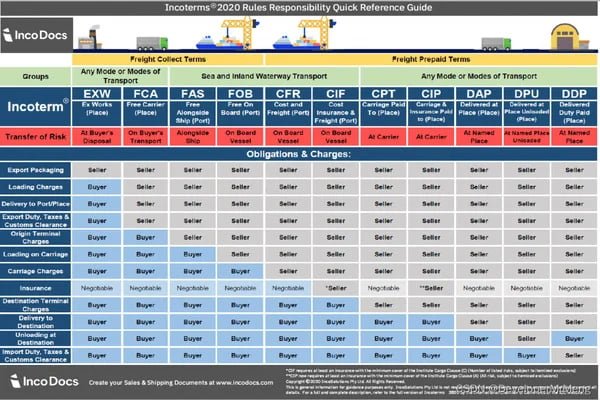
Check the trade term and named location agreed with the supplier. Then ask the forwarder where its quoted responsibility begins and ends.
Under EXW, loading and export clearance are not automatically the seller’s obligations. Those tasks need a workable arrangement. ICC also explains why FCA can be more suitable than FOB when containerised goods are handed over at a terminal rather than directly on board a vessel. See ICC’s EXW explanation and its FCA/FOB discussion.
For your quotation, the practical question is: who is arranging and paying for each step? Confirm that answer with the seller and forwarder before dispatch.
Check the measurement and charging basis
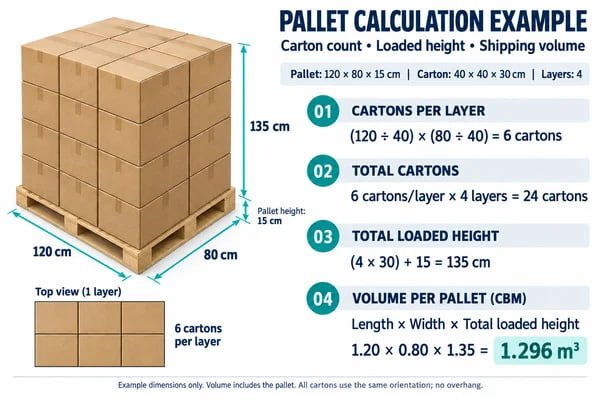
A price may be quoted per container, shipment, cubic metre, chargeable kilogram, or another agreed unit. Ask which measurements determine the final charge and whether minimum charges apply.
For air freight, confirm the actual-versus-volumetric weight calculation used for the proposed service. For sea freight, check how weight and volume are assessed. Different products and services may use different charging rules.
Tell the provider if pallets cannot be stacked. Also distinguish product weight from the gross weight of the complete package. See our export pallet loading and securing guide before requesting the final price.
Clarify document fees and conditional costs
If you need a certificate of origin or other specific documents, name them in the request. Ask who prepares them, what supplier information is required, and whether the related service cost is included.
Ask how waiting time, storage, inspections, booking amendments, or missed appointments would be charged if they occur. Where free time is offered, confirm its duration, when counting starts, the applicable rate afterward, and how chargeable days are documented.
Cargo insurance should be discussed explicitly. Do not assume the transport price includes the cover you want.
Use this short comparison checklist
Before approving a quotation, confirm:
- The same cargo details and pickup/delivery points were used.
- The route and transport mode are identified.
- Included services and exclusions are written down.
- Currency, payment terms, and rate validity are clear.
- The transit estimate has a defined starting and ending point.
- Any assumptions awaiting confirmation are visible.
A quotation can be competitive and still need clarification. Clear assumptions help both parties avoid disputes later.
Request a shipment-specific quotation
Send Deeplinker your pickup address, destination, product details, packing list, cargo-ready date, and required delivery scope. If you already have an offer, you can share its service breakdown so we can understand what you need to compare.
Conclusion: Compare the Full Cost, Not Just the Freight Rate
The cheapest freight quote is not always the most cost-effective option. A lower initial price may exclude services or destination charges that increase the final shipping cost.
Before choosing a freight forwarder, compare quotations based on the same cargo details, transport route, service scope, charging method, and delivery requirements. Ask for written confirmation of any excluded charges, conditional fees, and unconfirmed costs.
A clear, itemised quotation helps you understand the actual cost of moving your goods from the supplier to the final destination. For Canton Fair buyers sourcing from multiple suppliers, getting these details right before shipment can help prevent unexpected expenses and avoidable delays.
Frequently Asked Questions
1. What should a Canton Fair shipping quote include?
A shipping quote should clearly identify the transport route, shipping method, quoted charges, included services, exclusions, and rate validity. Depending on the agreed scope, it may cover factory pickup, warehouse handling, export clearance, international freight, destination handling, import customs clearance, and final delivery. Duties, taxes, and optional services should be identified separately where applicable.
2. Why do two freight forwarders offer different shipping prices?
Price differences can result from different transport routes, service levels, cargo measurements, charging methods, surcharges, and destination charges. One quotation may cover only international freight, while another includes pickup, customs-related services, and final delivery. Compare the complete service scope and potential additional costs before deciding.
3. How can I avoid hidden shipping costs when importing from China?
Provide accurate cargo dimensions, gross weight, package quantities, pickup and delivery addresses, and your required shipping service. Ask the forwarder to list included and excluded charges, explain any conditional fees, and confirm the quotation’s validity period. Also clarify who handles export and import formalities, whether duties and taxes are included, and what cargo insurance is available.